Fiber sounds a little boring, but high fiber baby foods become a lot more interesting when we realize that they grow baby’s gut.
Yes, GROW. However, this growth… this maturity… this complexity doesn’t happen automatically.
Like many things, conditions matter.
For example, a baby who is almost exclusively breastfed until 12 months old will have a “younger” gut than a baby who has eaten a little bit of This, a little bit of That… starting at around 6 months old. Especially when This and That include a spectrum of plants.
From the bean to the leafy green.
And don’t forget grains. One is even a common allergen, so it gets extra stars.
Ol’ Roughage is a lot less of a snooze-fest, amiright?
What researchers found in the CHILD cohort
There’s a Canadian study called the CHILD cohort.
It goes like this: About 3,500 mom-baby pairs followed from pregnancy onward, with baby assessments at one, three, and five years old. In one paper published in 2023, researchers looked closely at 1,115 of those babies, with stool samples collected at three months and again at twelve months.
What they found: The babies whose gut at twelve months looked younger than expected were more likely to have an allergic diagnosis at five years old. And not just one kind. All four.
- Eczema, which was the largest group
- Food allergy, so cow’s milk, peanut, egg, iykyk
- Allergic rhinitis, the runny nose and itchy eyes we call hay fever
- And asthma, which tends to show up later than the rest
But here’s what I want to know…
Does this mean that baby’s gut and immune system are besties??
The gut is meant to grow up (with the help of high fiber baby foods)
So what does a gut that “looks young” actually mean?
From zero to six months, we want baby’s gut to be filled with mostly one group of bacteria, the ones that thrive in a healthy breastfed baby.
Bifidobacteria aka Bifido Baddies (they’re really goodies 😉) are ultra protective to the gut barrier and show up for healthy immune training.
Your baby’s Bifido are fed with HMO breast milk sugars. This is one reason why breastfeeding is so important. But don’t worry, if breast milk isn’t an option, then formula with GOS have been found to do a good job of feeding baby’s bifidobacteria.
Then, we do solids.
High fiber baby foods, plant pigments that give fruit and veggies their color, and resistant starches (hopefully) arrive on baby’s tray and make their way to baby’s gut. New bacteria also arrive, to help break down these new foods.
These new bacteria create diversity and help the gut to grow up, starting at around 6 months old.
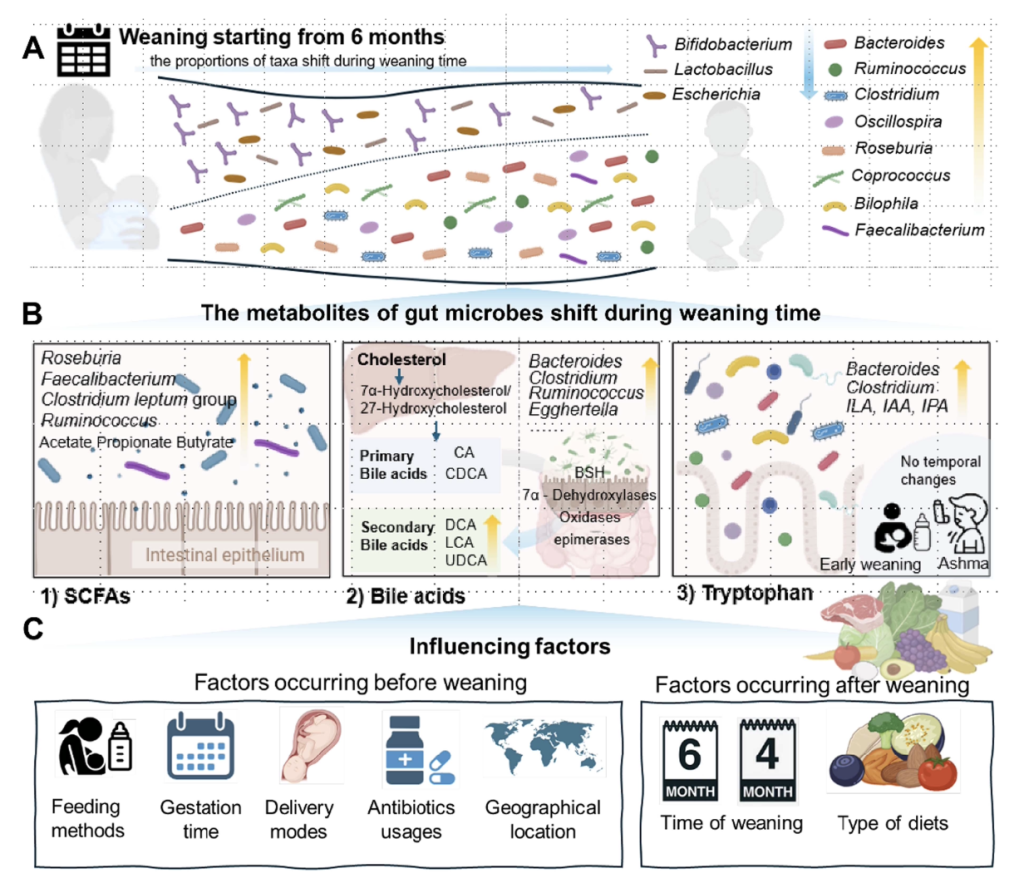
When this shift stalls, when the gut stays younger than expected. And over the past few years, this has caught the attention of researchers.
Because delayed maturation means less short chain fatty acids (sometimes you’ll see this called SCFAs) that feed the cells lining the gut, fortify the gut barrier, and teach the immune system to not overreact. It can also mean a thinner mucous layer.
So the issue isn’t that the early bacteria stayed (we still love you Bifido!)
…It’s that grown up Fiber Fermenters never really dropped in.
Tell us in the comments, what are your favorite high fiber baby foods?


Leave a Reply